
Ithaca winters can be tough, but it is totally possible to continue bike commuting around campus year round! However, adverse conditions (rain, sleet, snow, sub-zero windchill, etc.) may require some thoughtful attention to your clothing and gear. Here are some suggestions from someone who rides a bike around campus everyday, regardless of weather.
Clothing recommendations
Rain pants. Many if not most Cornell students own a rain jacket, but rain pants are more uncommon. If you regularly ride in precipitation, waterproof pants are just as important as a jacket. Cycling exposes your legs to the elements much more than walking, and tires will kick up a ton of water. Fenders can help to cut down on wheel spray, but if it is raining or snowing, your pants will get wet regardless. Rain pants also double as a wind breaker for your legs when wind chill becomes a major factor in the winter. REI’s Trailmade rain pants are a great option for quality rain pants that truly are completely waterproof.
Rain boots. Wet shoes are another deterrance from riding in precipitation. Rain boots are the best solution here. The Muck Boot Company makes great quality boots that are waterproof and insulated. One weakness of muck boots is friction from your heel moving up and down creating holes in the neoprene inner lining by the heel. Placing a strip of heavy duty duct tape along the entire length of the liner, from under the insole to the opening, will protect the boots from heel abrasion and make them last longer. Lighter duty boots will also work, as long as they are waterproof.
Wool socks. While warm rain boots may keep the outside cold and water out in the winter, riding to class only to sit in a warm lecture hall for an hour is a recipe for sweaty feet. Then, you are once again stuck with cold, wet feet. Thin wool socks (or thick, if its REALLY cold out) will stay warm even when wet, as opposed to cotton, which freezes. Any kind of wool socks meant for hiking will also work great for the freeze/thaw cycle of college bike commuting.
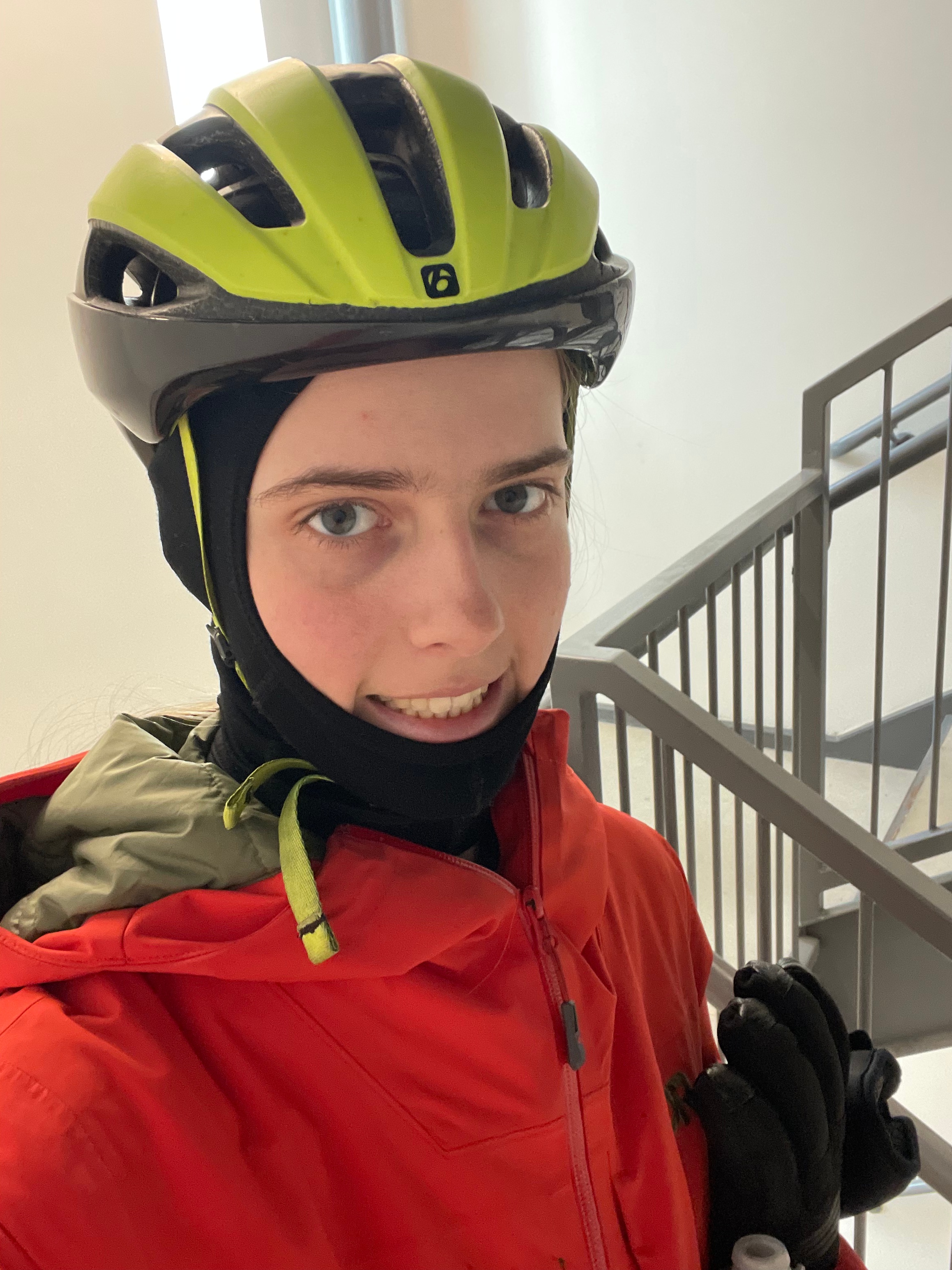
Thin hat and/or ski mask. A thin hat that fits under your helmet and covers your ears is a must for winter riding. The ratchet adjustment of a helmet should be able to accomodate a thin hat, otherwise you might want to go up a helmet size. The windchill from riding down a hill will freeze the tips of your ears if they aren’t covered. Smartwool hats are great hats that tend to work well with bike helmets. If it is REALLY cold (>10F), a ski mask can help to keep the cold from sneaking into the collar of your coat.
Gear recommendations
Clear safety glasses. Another classic problem with riding in the rain or snow is the precipitation hitting your eyeballs and blinding you. Glasses will solve this problem, whether that is normal eyeglasses or sunglasses/safety glasses. If it is raining, the sun is probably not out, so sunglasses would only add to the doom and gloom. Hence, clear safety glasses are ideal for the non-glasses wearers doing rain/snow (bonus points for snowy night!) riding. Milwaukee clear anti-scratch safety glasses are a great option that are fairly robust, high quality, and minimally dorky-looking for $8. The tinted version also are servicable as sunglasses for fair weather cycling, even for a serious cyclist doing a lot of miles. They really are pretty good. Tucking the arms behind your helmet’s ratchet adjustment system can help keep them more secure.
Headlight. Winter means that night riding conditions can begin as early as 4:30pm. Having at least a headlight (ideally also a taillight) on your bike is a huge safety concern at night, especially if it is also raining or snowing. Cold weather will quickly drain the battery on a light. If you plan to leave your bike locked up outside for a length of time in the cold, it is best to bring your light into the building with you, otherwise you risk returning to a completely dead battery. Remembering to charge a light and actually having it with you when you need it can be a challenge. However, it IS a worthy battle to fight, because you really don’t want to crash on a dark pothole, or hit a pedestrian, or be hit by a car! The Cornell Cycling Club may be able to help Cornell students with access to head/taillights.
Conclusion
At the start of the semester, it can be difficult to find room at the bike racks because of the sheer number of student cyclists. By mid-November, it is like a ghost town out there. However, with the right gear, right bike (see all-weather bike page) and the right attitude, there is no reason to stop riding your bike! Ok, maybe in this one scenario: if you start to ride your bike and realize that BOTH of your brakes AND both of your shifters are frozen solid, your trusty steed might need a dethaw day. But there is something empowering about confidently riding through a rainstorm or snowstorm and coming out the other end bone dry. So wear your rain pants proudly and remember that cycling is the fastest way around campus, especially when all the electric scooter batteries freeze!
 Cornell Cycling Club