
What makes a good commuting bike? In the context of Cornell campus commuting, a good commuter is a bike that gets you around campus or into town faster than walking, but that you don’t mind leaving locked up outside in the elements. A commuter is inherently a slightly sacrificial “beater” bike that is not particuraly cherished or performance oriented. It may be purchased used or cheaply new, or may simply be the bike that you already have. What follows is an outline of some common types of commuter bikes and their pros and cons:
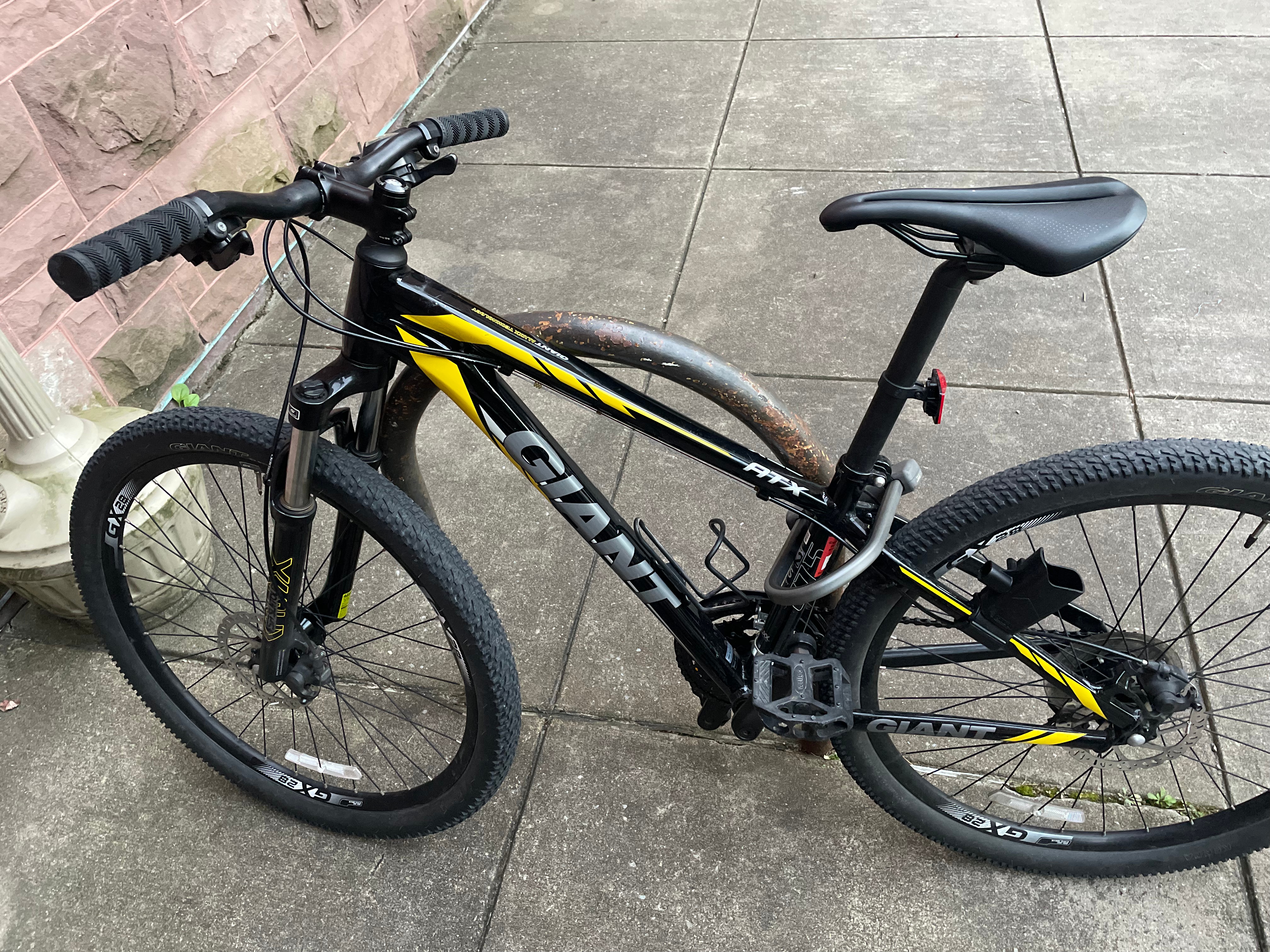
A cheap, entry level hardtail mountain bike can be a great option for campus commuting [see example below]. Hardtail means that it has a front suspension fork but rigid seat post. Cheap full-suspension bikes do exist, but are probably best avoided due to the low quality of the rear suspension, added complexity, and lack of functionality. A hardtail mountain bike (even a cheap one not intended for intense mountain biking) will have wide tires and good climbing gears. Wide tires make the bike rideable year round: 2.5in tires can handle a few inches of snow without completely losing traction. Mountain biking-oriented gearing make the campus hills manageable with a bit of effort. Wide, flat handlebars can be useful for maneuvuring in packs of pedestrians at a slow speed. Disk brakes (even the cheaper mechanical ones) can provide extra stopping power and increased braking reliability in wet conditions. Some roads, like the descent down University Ave. into town, do require significant braking forces. A bike like this will be generally slow and heavy compared to a road bike, but may be more reliable year round.
Bikes with electronic assist are very popular on campus. The benefit of e-bikes are obvious to anyone who has walked around Cornell’s campus: a motor will greatly help with riding uphill. And there are a LOT of hills on campus. However, e-bikes are expensive and heavy compared to mechanical bikes, are a greater target for theft, and have to be charged.
Road bikes are another option. A road bike is inherently the lightest and quickest type of (mechanical) bike. However, if buying an older, used road bike, it may be worth considering gearing, tire width, and fit issues. Road bikes are more inclined to have aggressive gearing meant for speed, and not clawing up steep Ithaca hills. A lowest gear of at least 1:1 (ratio of teeth count of the smallest front chain ring to teeth count of largest gear on the cassette) is probably ideal for comfortable hill climbing on campus. Narrower tires might struggle in the winter with rain, ice and snow, but are speedier in fair weather. Lastly, the more aggressive riding position of a road bike can make it inherently more uncomfortable than a mountain bike style set-up for casual riding, especially if the bike is older and not adjusted well. Still, a properly geared and adjusted road bike is a great option, and makes more sense for longer commutes.
Gravel bikes are a cross between a road bike and a mountain bike. They have larger tires like a mountain bike, but maintain the geometry of a road bike. The Ozark Trail Explorer gravel bike from Walmart is fairly common around campus. This is likely a great cheap bike option, although the hardtail mountain bike remains the king of winter weather commuting. Bikes from department stores may not be assembled correctly, so it would be wise to readjust it yourself, or take the bike to a dedicated bike shop for a once-over if you are unfamiliar with bikes.
 Cornell Cycling Club